Goddess of: Agriculture • Harvest • Fertility

Demeter

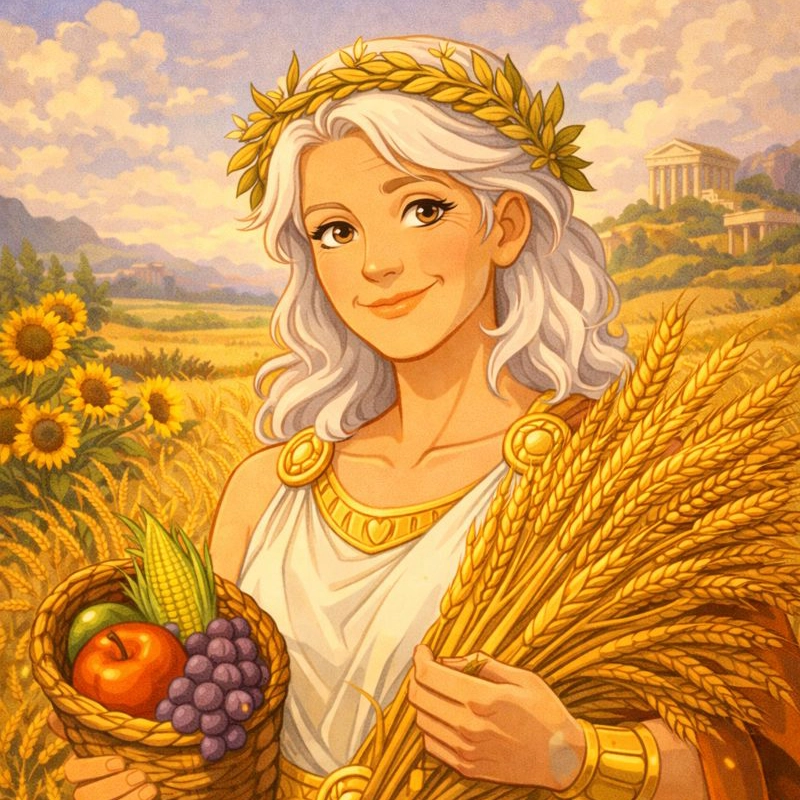
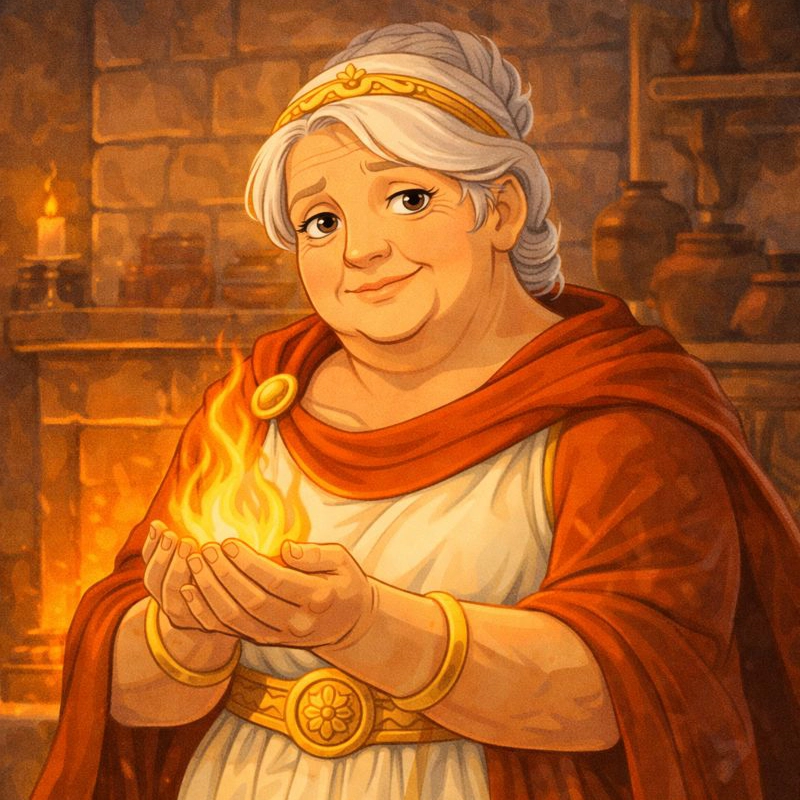
Demeter is the goddess of agriculture, fertility, and the harvest. She is deeply connected to the cycle of life and nature, ensuring that crops grow and seasons change.

Big Idea graphic
When something important is taken away, even the whole world can feel the change—until balance is restored.
Roman Name: Ceres
Parents: Cronus and Rhea
Spouse(s): None, but had Persephone with Zeus
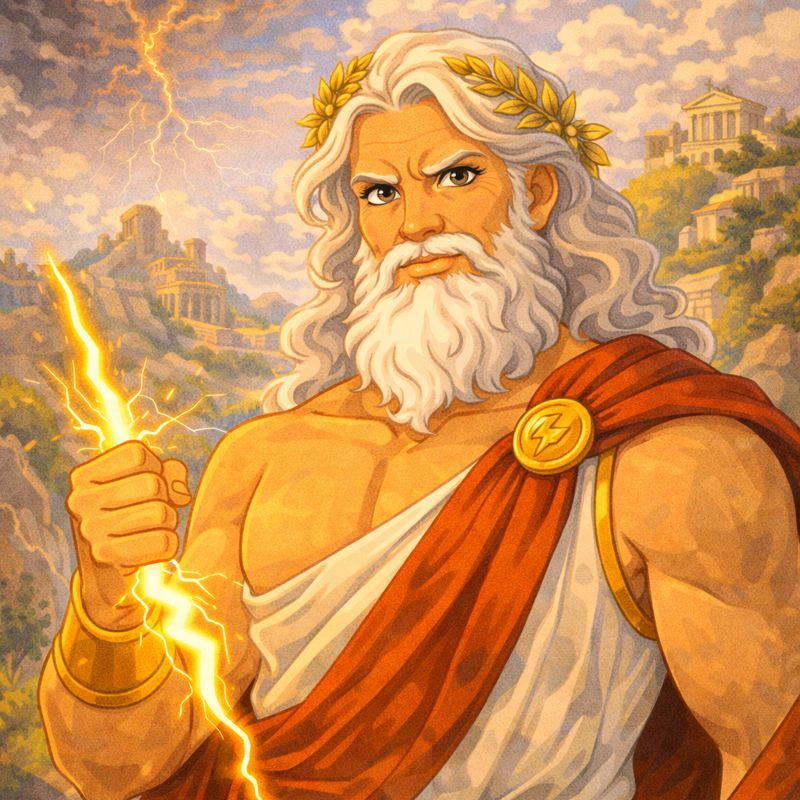
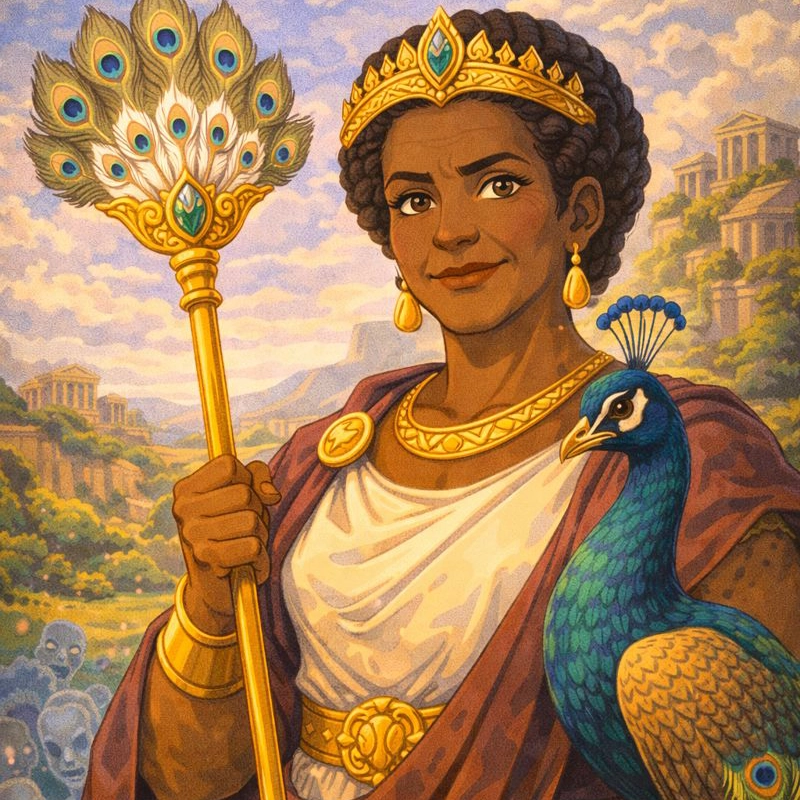
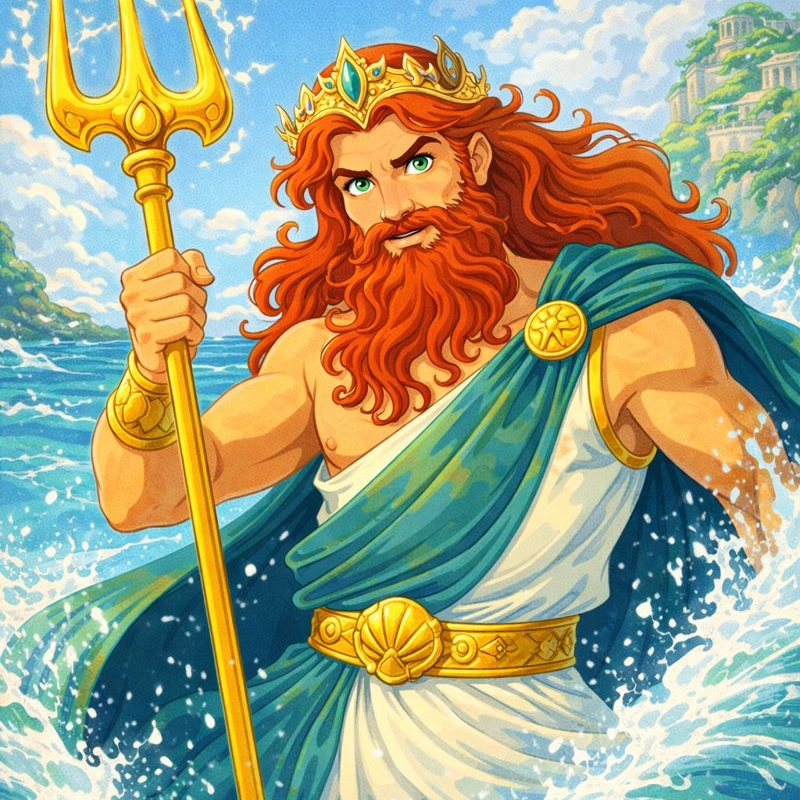
Siblings: Zeus, Poseidon, Hades, Hera, Hestia
Children: Persephone, Arion (with Poseidon)

Background

Demeter is the goddess of agriculture, fertility, and the harvest. She is deeply connected to the cycle of life and nature, ensuring that crops grow and seasons change. Her most famous myth revolves around the abduction of her daughter, Persephone, which led to the creation of the seasons.

Symbols associated with Demeter include wheat, the cornucopia, and the torch. She was widely worshipped across Greece, particularly in the Eleusinian Mysteries, a sacred festival celebrating the cycle of life, death, and rebirth.

Did you know
Demeter’s Roman name is Ceres—where we get words connected to grain foods, like “cereal.”

Quick Facts

🌾 Demeter is the goddess of agriculture, harvest, and fertility.
🔥 Her symbols include a torch and wheat.
👧 Her daughter is Persephone.
🍂 Her myths help explain the changing seasons.
🏛️ She was honored in the Eleusinian Mysteries.

Vocabulary

agriculture — farming; growing crops and raising animals for food.
harvest — gathering ripe crops from fields.
famine — a severe shortage of food.
underworld — the realm of the dead ruled by Hades.
cornucopia — a symbol of plenty, shaped like a horn overflowing with food.

The Abduction of Persephone

Persephone, the beautiful daughter of Demeter, loved to spend her days wandering through meadows, picking flowers with her friends. One day, as she reached for a particularly lovely bloom, the ground beneath her suddenly cracked open. Out of the darkness emerged Hades, the god of the underworld, in his golden chariot. Before Persephone could react, he swept her away into the depths of his dark kingdom.

Demeter, unaware of what had happened, searched the earth for her daughter. She called out Persephone's name, but no one answered. For days, she wandered, growing more and more desperate. Eventually, she learned the truth—Hades had taken Persephone to be his queen.

Heartbroken and furious, Demeter abandoned her duties as the goddess of the harvest. Without her care, crops withered, and famine spread across the land. The once green fields turned dry and lifeless, and people began to suffer.

Seeing the world in despair, Zeus, the king of the gods, knew he had to act. He sent Hermes, the swift messenger, to the underworld to bring Persephone back. Hades agreed to let her go, but before she left, he tricked her into eating a few seeds from a pomegranate. Because she had eaten food from the underworld, she could not leave forever.

A compromise was made: Persephone would spend part of the year with her mother on earth, bringing warmth and growth, and part of the year with Hades in the underworld. When she was with Demeter, the earth flourished, and crops grew—this was spring and summer. When she returned to the underworld, Demeter mourned, and the land became barren—this was fall and winter.

This is how the ancient Greeks explained the changing seasons, with Demeter’s sorrow and joy shaping the cycle of life on earth.


Demeter and the People of Eleusis

After Persephone was taken by Hades, Demeter wandered the earth in disguise, searching for her daughter. Weary and heartbroken, she arrived in the city of Eleusis, where she took the form of an old woman. She sat by a well, resting from her journey, when she was approached by the daughters of King Celeus. Seeing the elderly woman in need, they invited her to their home.

Demeter, still in disguise, was welcomed by Queen Metaneira, who offered her food and shelter. In gratitude, Demeter took care of the queen’s infant son, Demophon. She grew fond of the child and decided to make him immortal by placing him in a sacred fire each night, burning away his mortality.

One night, Queen Metaneira walked in and saw what was happening. Horrified, she screamed, thinking Demeter meant to harm the child. The goddess, angered by the interruption, revealed her true form, shining with divine radiance. She scolded the queen for interfering, explaining that Demophon had nearly become a god.

Despite this, Demeter did not punish the people of Eleusis. Instead, she instructed them to build a great temple in her honor and taught them sacred rites that would later become the Eleusinian Mysteries, one of the most important religious ceremonies in ancient Greece.

These mysteries celebrated the cycle of life, death, and rebirth, mirroring Demeter’s sorrow and joy as Persephone traveled between the underworld and the earth. The people of Eleusis honored Demeter for generations, and her blessings ensured that their fields were fertile and their harvests abundant.

Poseidon, Demeter, and the Creation of Horses

Poseidon once fell in love with the goddess Demeter. However, Demeter did not return his feelings and tried to distract him by asking for an impossible task—she told Poseidon to create the most beautiful creature the world had ever seen.

Determined to impress her, Poseidon began shaping animals from the sea foam and earth. He first created great sea monsters, then land creatures like camels, giraffes, and even zebras. However, none of them satisfied him. Finally, he sculpted a magnificent animal, strong and swift, with a flowing mane and powerful legs—the first horse.

As soon as the horse galloped across the land, Poseidon realized he had created something truly special. Though Demeter still did not love him, he had given the world a noble and loyal animal. Horses became symbols of strength and freedom, and they were closely connected to Poseidon, who was often called the “Tamer of Horses.”

To this day, Poseidon is honored as the creator of horses, and many ancient Greeks believed that his spirit lived in the wild stallions that roamed the land.

Explore the Olympians

Click on an image below to learn more about the Olympians: