Hestia
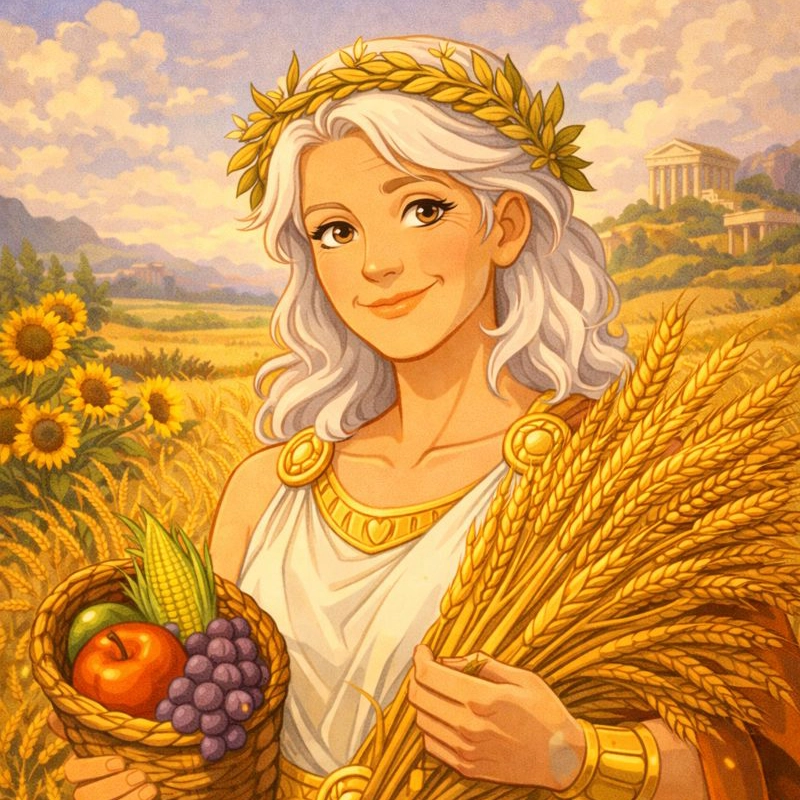
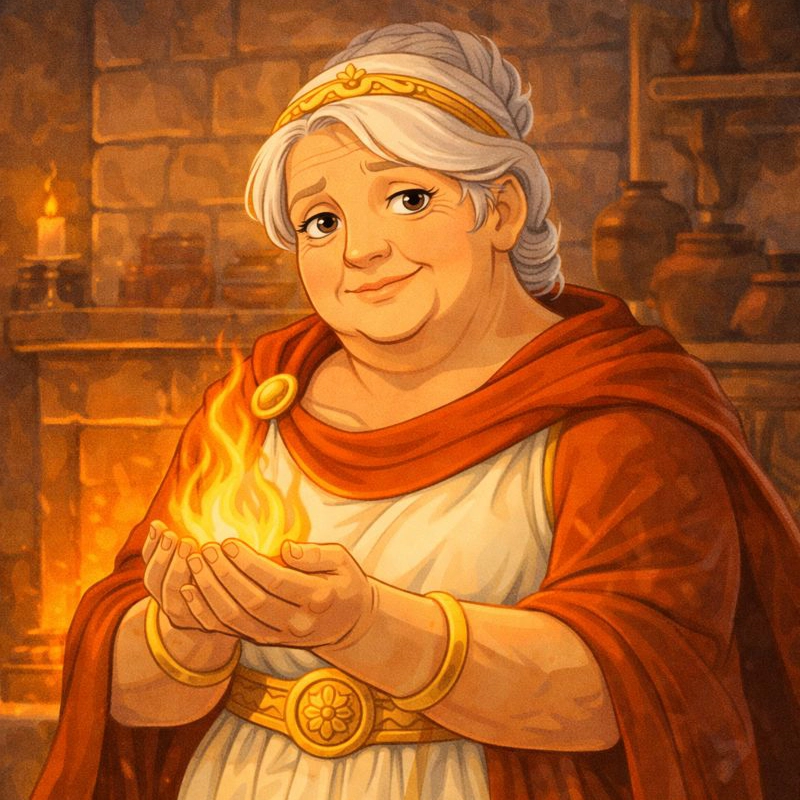
Hestia is the gentle goddess of the hearth— the warm center of the home. She represents peace, stability, and the feeling of belonging when people gather together.
Background
Hestia is the Greek goddess of the hearth, home, and family. She is one of the twelve original Olympian gods, born to Cronus and Rhea. As the eldest child, she was swallowed first by her father and later freed by Zeus. Unlike many of her siblings, Hestia stayed out of conflicts and was known for her gentle and peaceful nature. She chose to remain unmarried, rejecting offers from both Poseidon and Apollo, dedicating herself instead to maintaining the sacred flame of Olympus.
Hestia was deeply respected in Greek society, as every home, temple, and city had a hearth dedicated to her. The fire in her hearth was never allowed to go out, symbolizing stability and unity. Her Roman counterpart, Vesta, was worshipped with great devotion, and priestesses known as the Vestal Virgins kept her flame burning in Rome.
Although she was an important deity, Hestia is sometimes said to have given up her seat on Mount Olympus to Dionysus, the god of wine. This version of the story suggests that she stepped aside willingly to avoid conflict among the gods. However, even if she was not always counted among the Olympians, her presence was still honored in every Greek home and city.
Vocabulary
The Arrival of Dionysus
Long ago, on Mount Olympus, twelve gods ruled over the cosmos. Among them was Hestia, the goddess of the hearth, known for her gentle and peaceful nature. While her siblings often engaged in conflicts and adventures, Hestia remained quiet, tending the sacred flame that kept Olympus warm and united.
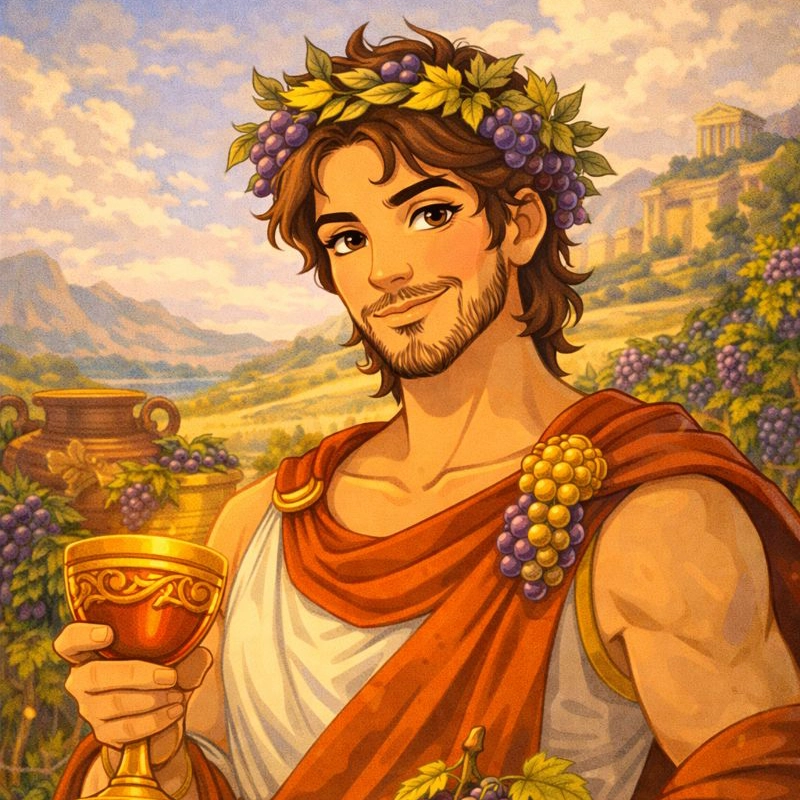
One day, Zeus introduced a new god to Olympus—Dionysus, the son of Zeus and the mortal princess Semele. Dionysus was different from the others. He brought wine, joy, and celebration wherever he went. As he took his place among the gods, a question arose: was there room for another Olympian?
Hestia, always selfless, saw the growing excitement over Dionysus and the way he brought laughter and festivity to the world. Rather than allow a quarrel among the gods, she stepped forward and made a quiet decision. "I do not seek power or glory," she said. "I will give up my seat at the Olympian table, for my place is in every home where a fire burns and a family gathers."
The gods honored her decision, and though she no longer sat among the Twelve, her presence remained essential. Every hearth, temple, and city kept her flame alive, ensuring that Hestia’s warmth was never forgotten.
Hestia’s Silent Power
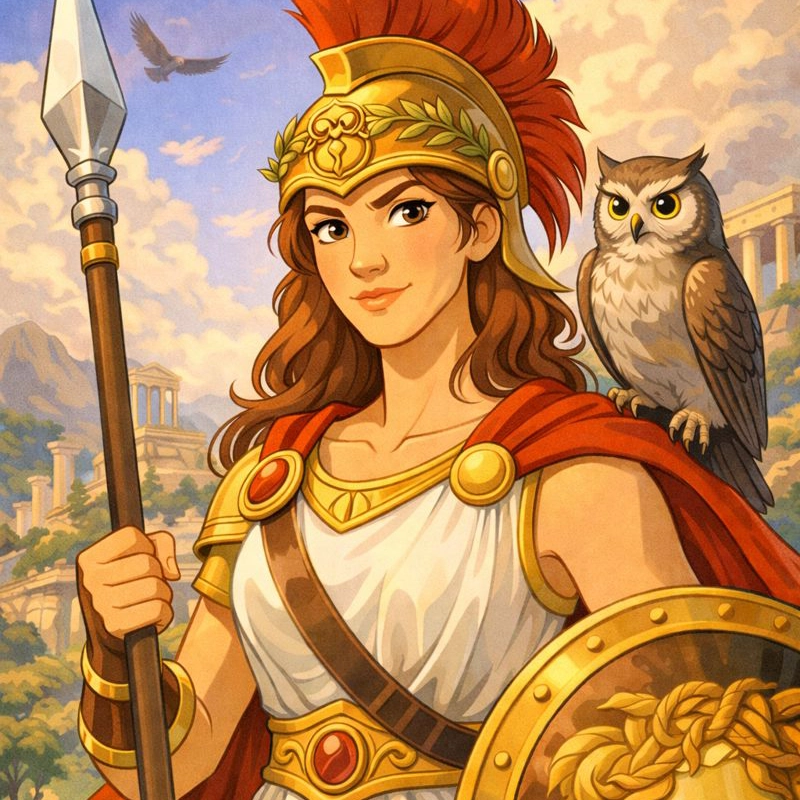
Among the mighty gods of Mount Olympus, Hestia was the quietest. She did not seek war like Ares, wisdom like Athena, or the thunderbolt like Zeus. Instead, she watched over the hearth, tending the sacred flame that kept Olympus warm and united. Though she never sought attention, the other gods knew that without her, their home would not be the same.
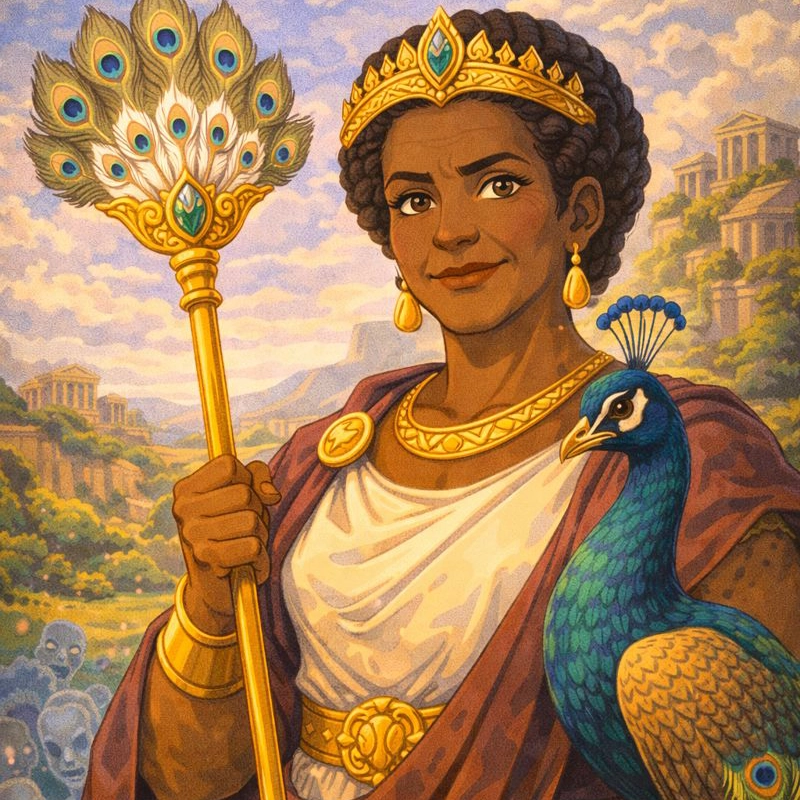
One day, a quarrel broke out between the gods. Ares and Apollo argued over a battle, while Hera and Zeus shouted over matters of power. The tension in Olympus grew, and even mighty Poseidon’s temper flared like a stormy sea. As their voices echoed across the halls, the flames in Hestia’s hearth flickered, growing weaker. Without its steady warmth, the palace grew colder, and shadows stretched across its golden halls.
Hestia, calm and steady as always, rose from her seat. Without a word, she knelt before the hearth, feeding the fire with fresh wood and breathing warmth back into its embers. Slowly, the golden glow returned, filling Olympus with light. The gods, noticing the warmth, paused their quarrel. They felt a quiet peace settle over them, and their tempers cooled. One by one, they turned away from their anger, reminded of the home that bound them together.
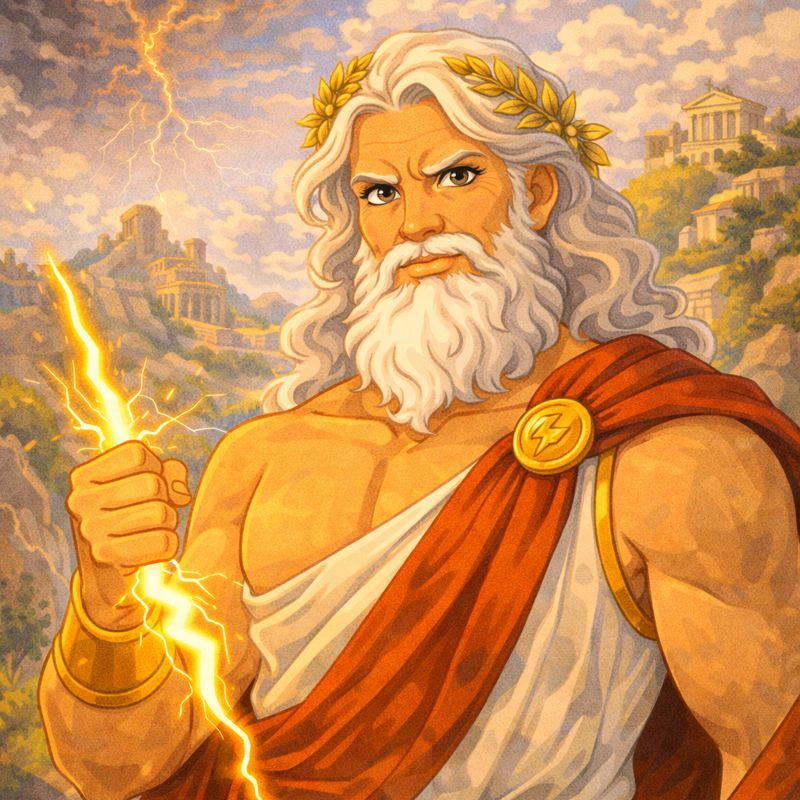
Zeus, watching in silence, spoke at last. "It is not strength or wisdom alone that holds Olympus together," he said. "It is Hestia’s flame—steady, unwavering, and ever-present." From that day on, the gods knew that while Hestia did not seek power or praise, her silent presence was more vital than any throne or weapon.
The Eternal Flame: Hestia’s Role in Greek Homes and Temples
In every Greek home, a sacred fire burned at the center of the household. This flame was not just for warmth or cooking—it was a symbol of Hestia, the goddess of the hearth. As long as the fire burned, the home was protected, and the family remained united. From the grandest palace to the humblest cottage, all fires were lit in her honor, for Hestia’s presence brought peace and stability.
Hestia’s influence stretched beyond homes to the great cities of Greece. In each city, a sacred fire burned in a public hearth, often in the prytaneion, the heart of the city’s government and life. This eternal flame was never allowed to go out, for it represented the unity of the people and the blessings of the gods. If a new colony was founded, its settlers carried embers from their city’s sacred fire to their new land, ensuring that Hestia’s presence traveled with them.
One day, a great storm swept through a city, and strong winds threatened to extinguish its sacred fire. The people panicked, for they believed disaster would follow if Hestia’s flame went out. The priests gathered around the hearth, shielding it from the wind, and prayed for the goddess’s protection. Just as the last embers began to dim, the wind suddenly calmed. The fire flickered, then blazed back to life, burning even brighter than before. The people rejoiced, knowing that Hestia had heard their prayers and would continue to watch over them.
Unlike the other gods, Hestia did not demand grand temples or great statues. Instead, she was present in every home, in every city, and in every warm fire that brought people together. Though she was quiet and often overlooked, the Greeks knew that without her, their world would fall into chaos. As long as her eternal flame burned, Hestia’s gentle power remained unshaken.
Hestia’s Vow of Eternal Virginity
Long ago, when the gods had defeated the Titans and claimed their thrones on Mount Olympus, many deities sought power, love, and adventure. But Hestia, the eldest of the Olympians, desired none of these things. She found peace in the quiet warmth of the hearth, tending the sacred fire that kept Olympus glowing.
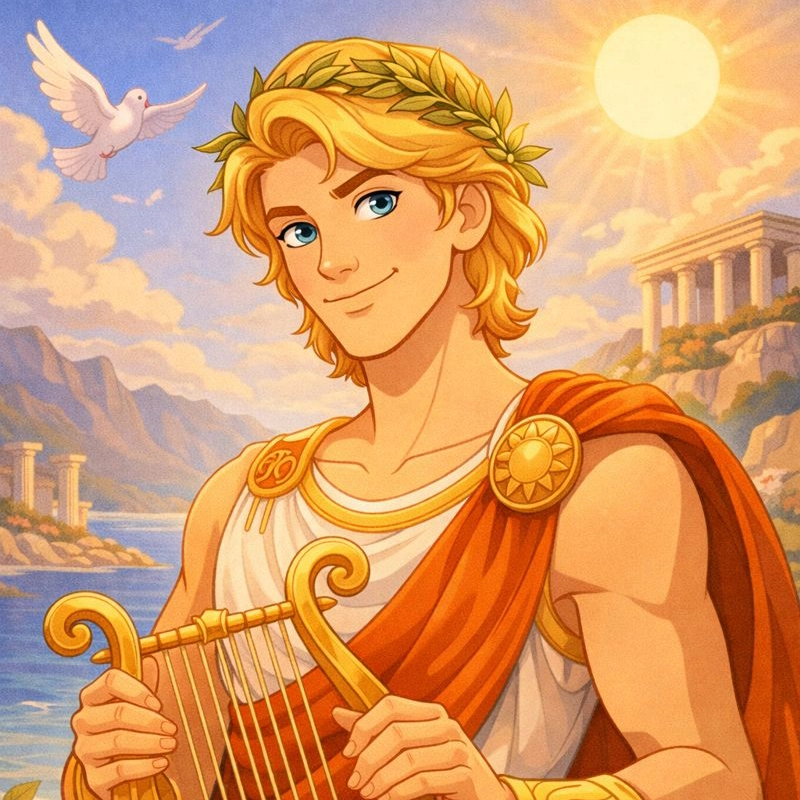
Over time, two powerful gods, Poseidon, lord of the sea, and Apollo, god of the sun and music, both sought Hestia’s hand in marriage. Poseidon, with his vast oceans, promised her dominion over the deep, while Apollo, with his golden chariot, vowed to bring her endless light and knowledge. The other gods watched with curiosity—who would Hestia choose?
But Hestia did not wish to rule the sea or ride across the sky. She saw how love often brought jealousy and conflict, and she did not wish to be part of such struggles. Instead, she approached Zeus, king of the gods, and made a solemn vow. "I ask for no throne, no husband, and no children," she said. "Let me remain untouched, free to tend the sacred flame that warms both gods and mortals."
Zeus, moved by her devotion, granted her wish. He swore that Hestia would always be honored in Olympus and on Earth. "Every home, every temple, and every city shall keep a fire in your name," he declared. "Though you sit quietly, your presence will be felt in every warm hearth and gathering place."
From that day forward, Hestia remained true to her vow, never marrying and never seeking power. While the other gods waged wars, fell in love, and quarreled, she remained constant—watching over the fires that brought families together, ensuring that peace and warmth never faded from the world.